Quilts
Loading...
The terrorist attacks of September 11, 2001, ignited a global passion to provide aid and comfort. For those unable to participate in actual rescue and recovery efforts at the various disaster sites, quilting emerged as one practical and creative way to demonstrate compassion and support for 9/11 family members, responders, survivors, and others who were profoundly affected by the attacks.
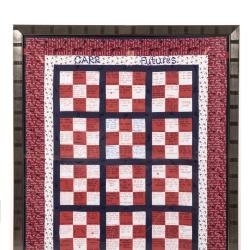
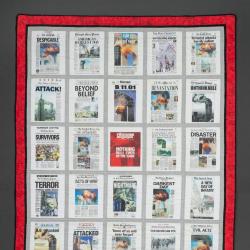
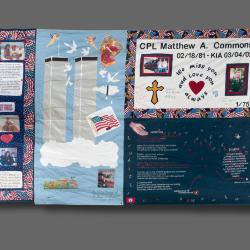
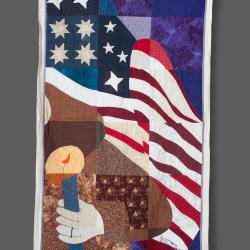
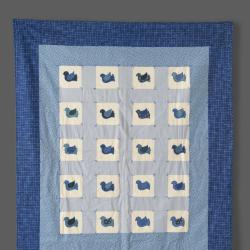
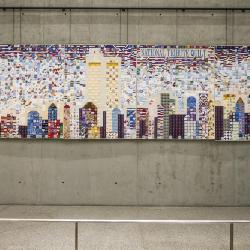
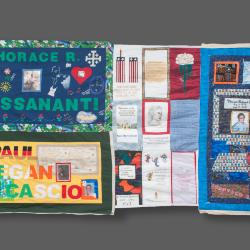
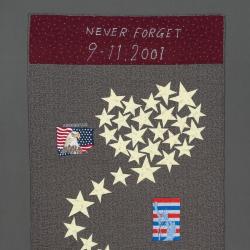
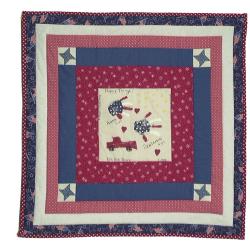
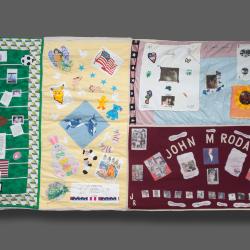
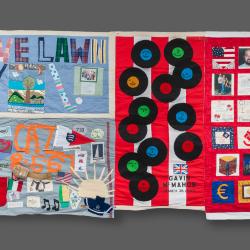
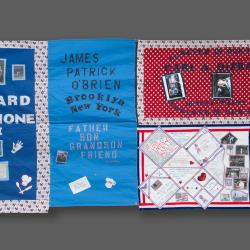
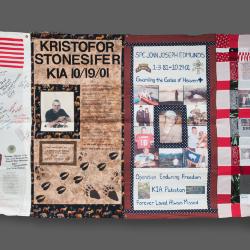
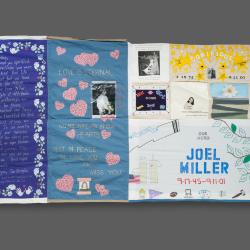
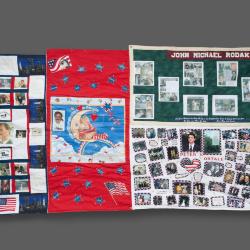
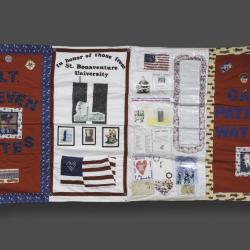
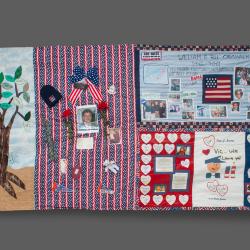
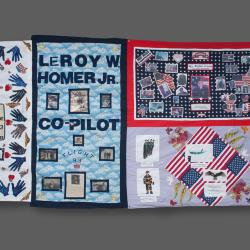
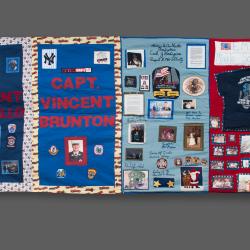
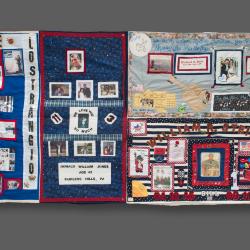
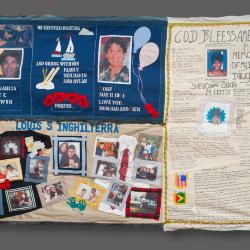
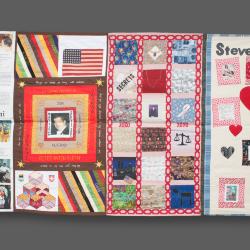
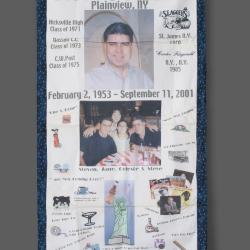
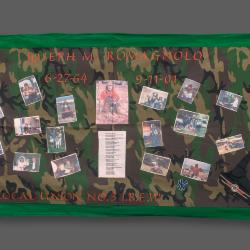
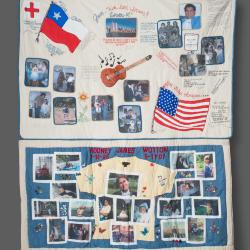
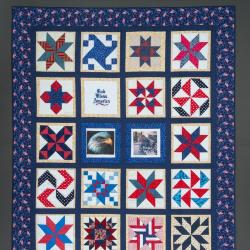
Traditionally the outcome of either communal or solitary cutting, piecing, and sewing efforts, quilts are both functional and tactile expressions of their makers’ emotions, ideas, and materials at hand that could be recruited into meaningful service. Those drawn to making quilts in response to 9/11 frequently used patriotic motifs, religious symbols, and images that quickly became emblematic of the attacks, such as the Twin Towers, the 5-sided Pentagon, airplanes, and firefighting paraphernalia. Some quilts served as memorial gestures in honor of specific individuals or groups of coworkers who had been killed while also performing therapeutic and healing functions for those making them. Communication of the magnitude of human loss suffered on 9/11 and the event’s disproportionate impact on particular companies, agencies, towns, and colleges are other themes that emerged among quilters.
The Museum’s Collection contains more than a hundred commemorative quilts. A selection are accessible on this website.
Traditionally the outcome of either communal or solitary cutting, piecing, and sewing efforts, quilts are both functional and tactile expressions of their makers’ emotions, ideas, and materials at hand that could be recruited into meaningful service. Those drawn to making quilts in response to 9/11 frequently used patriotic motifs, religious symbols, and images that quickly became emblematic of the attacks, such as the Twin Towers, the 5-sided Pentagon, airplanes, and firefighting paraphernalia. Some quilts served as memorial gestures in honor of specific individuals or groups of coworkers who had been killed while also performing therapeutic and healing functions for those making them. Communication of the magnitude of human loss suffered on 9/11 and the event’s disproportionate impact on particular companies, agencies, towns, and colleges are other themes that emerged among quilters.
The Museum’s Collection contains more than a hundred commemorative quilts. A selection are accessible on this website.